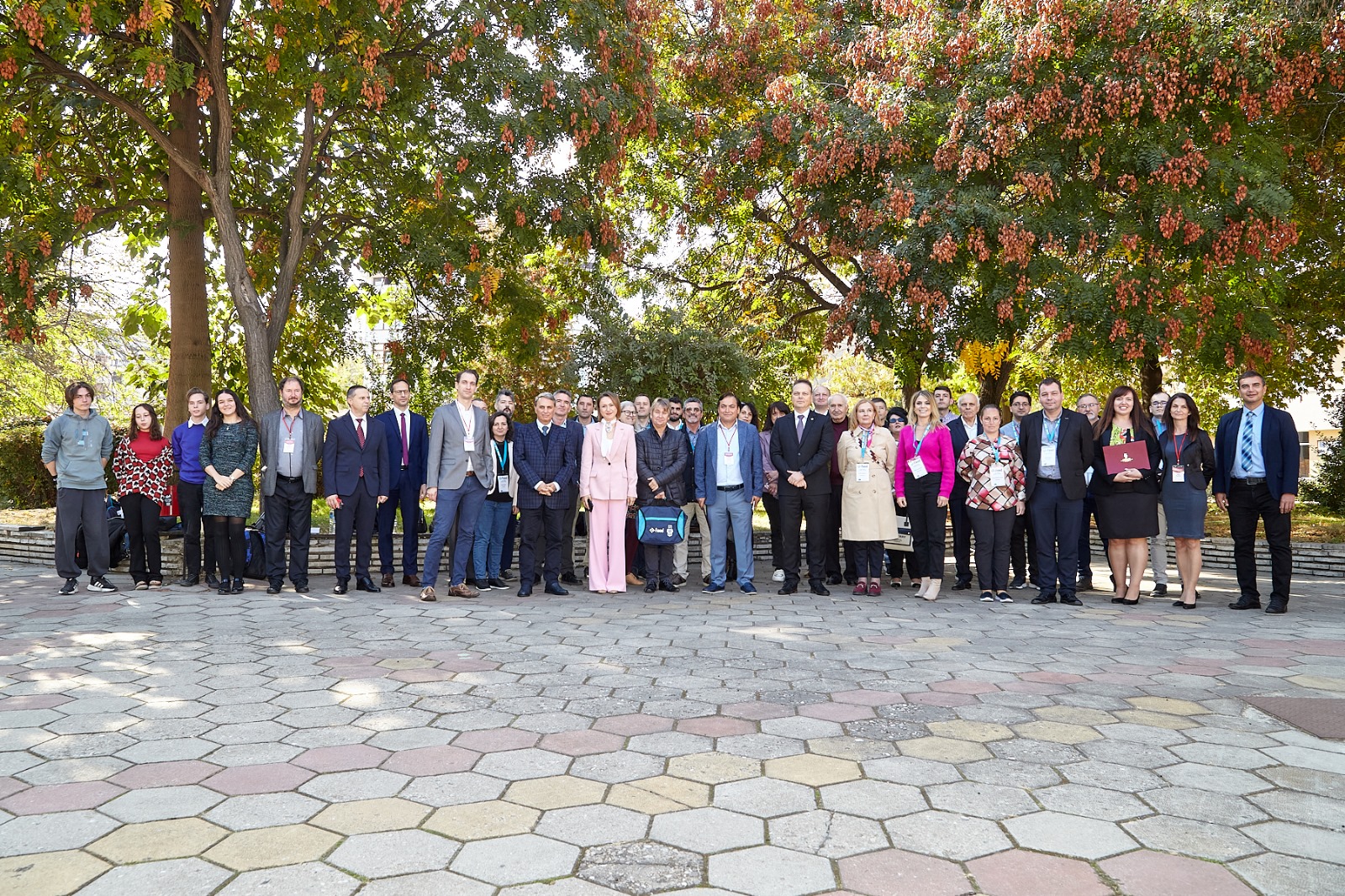
Working Meeting at the University of Debrecen, Hungary
In the period 13–17 December 2023, a transnational working meeting within the Erasmus+ project E-FOOD – “E-learning tools for Food technology and development education” (Project No. 2022-1-BG01-KA220-HED-000085089) was held at the University of Debrecen,
Faculty of Agricultural and Food Sciences and Environmental Management, Hungary.
The meeting brought together representatives of all partner institutions from Bulgaria, Spain, France, Romania, and Hungary and was hosted by the University of Debrecen. The working sessions were officially opened by Dr. László Stündl, Dean of the Faculty of Agricultural and
Food Sciences and Environmental Management, Dr. Endre Máthé, Local Team Coordinator and Head of the Institute of Nutrition, and Assoc. Prof. Georgi Kostov, E-FOOD Project Coordinator.
The main objective of the meeting was to review the overall progress of the E-FOOD project, to coordinate the development of core intellectual outputs, and to ensure consistency in the implementation of digital educational standards across partner institutions. In his opening
presentation, the project coordinator provided a comprehensive overview of project management, implementation status, and achieved milestones, emphasizing adherence to the project timeline and Erasmus+ quality requirements.
A central focus of the meeting was the development of the E-FOOD educational database, which represents a key intellectual output of the project. Partners engaged in in-depth discussions on the structure, scope, and content of the database, covering:
traditional and innovative food products;
raw materials and ingredients;
food processing technologies;
innovation in foods and nutrition;
food management and marketing aspects.
These discussions aimed to ensure the database’s relevance, applicability, and alignment with both academic curricula and industry needs. Significant attention was also devoted to the development of teaching and training courses, including the definition of educational standards, curricula structure, and learning outcomes.
Partners reviewed the progress of course development and discussed harmonization between institutions to support comparability, transferability, and international use of the developed learning materials. Further working sessions addressed the development of internal and external audit standards, focusing on quality assurance mechanisms, evaluation procedures, and monitoring tools to guarantee the academic rigor and sustainability of the project outputs.
The professional programme was complemented by expert visits to specialized facilities within the Faculty of Agricultural and Food Sciences and Environmental Management, including the Pilot Plant of the Food Innovation Center at the Institute of Food Technology and the Fish
Biology Base of the Institute of Animal Science, Biotechnology and Nature. These visits supported the practical orientation of the project by linking digital educational content with real-life technological infrastructure and applied research environments.
In addition, the consortium conducted a professional visit to an associated partner company, Balmaz Bakery Ltd., affiliated with the Institute of Nutrition. The visit provided valuable insights into industrial-scale production processes and reinforced the connection between academic
training, digital learning tools, and real industrial practice.
The Debrecen meeting confirmed the substantial progress achieved within the E-FOOD project and demonstrated the strong commitment of the consortium to developing high-quality digital educational resources in food technology and product development. The outcomes of the meeting significantly contributed to the consolidation of project results and laid a solid foundation for the next implementation phases.
Project Reference
E-FOOD Project No.: 2022-1-BG01-KA220-HED-000085089 “E-learning tools for Food technology and development education”
The European Commission’s support for the production of this publication does not constitute an endorsement of the contents, which reflect the views only of the authors, and the Commission cannot be held responsible for any use which may be made of the information contained therein.